
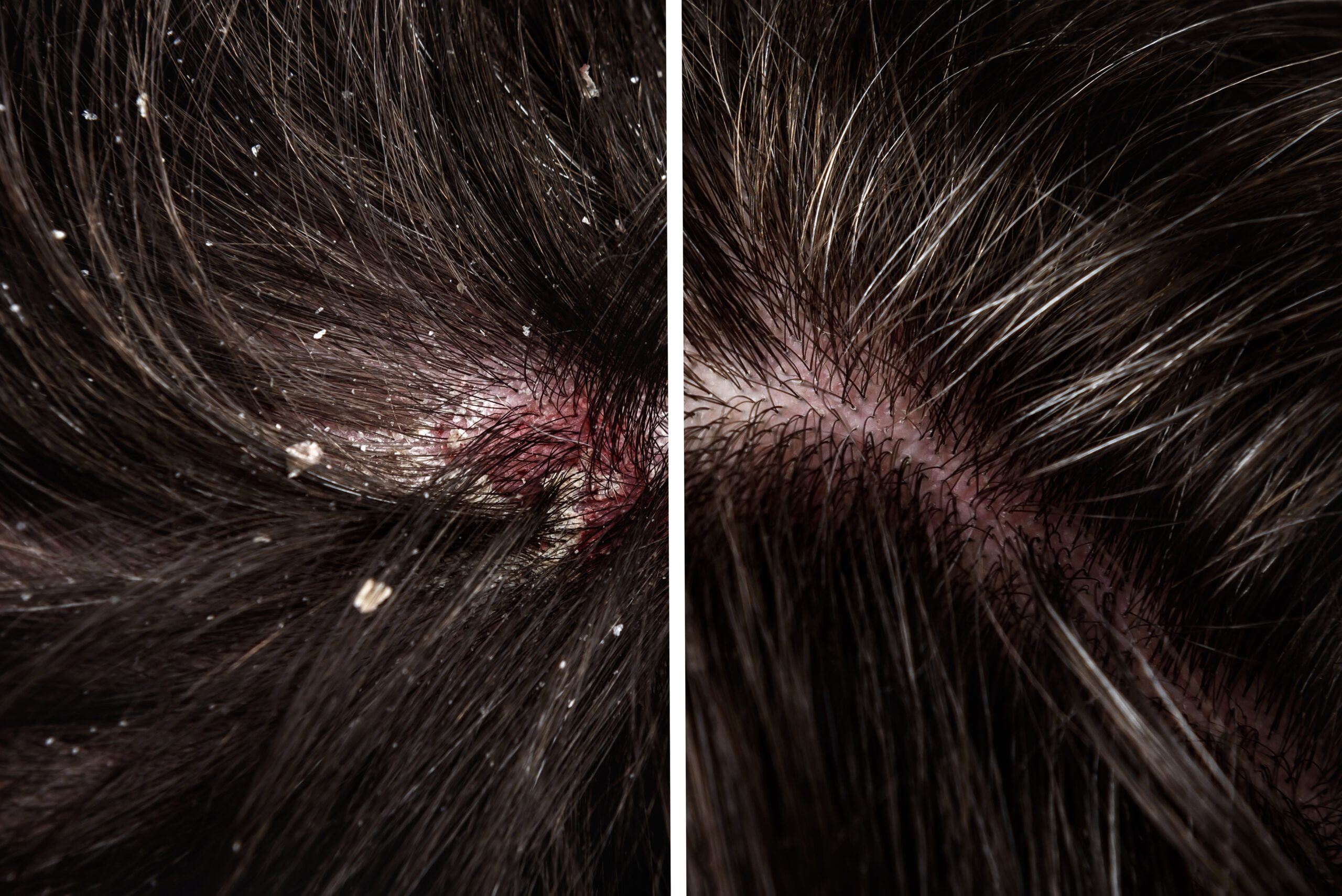
Many people notice flakes or itching on their scalp. But is it scalp psoriasis or dandruff? Knowing the difference between scalp psoriasis and dandruff is important. Both are common scalp conditions, but they need different care. In this blog, you will learn how to tell scalp psoriasis from dandruff. We will also cover symptoms, causes, and treatment options. This guide will help you understand your scalp condition better.
What is Scalp Psoriasis?
Scalp psoriasis is a long-lasting skin problem. It causes thick, red patches on the scalp. These patches often have silvery-white scales. Sometimes, the patches can spread to the forehead, neck, or behind the ears. Scalp psoriasis is not contagious. It is an autoimmune condition, which means the body’s immune system attacks healthy skin by mistake. According to the National Psoriasis Foundation, about half of people with psoriasis have it on their scalp.
What is Dandruff?
Dandruff is a common scalp condition. It causes white or yellow flakes of dead skin. The flakes often fall from the scalp onto your shoulders. Dandruff can also make your scalp itchy or oily. Unlike scalp psoriasis, dandruff does not cause thick patches or redness. Dandruff is not harmful or contagious. It is often linked to dry skin or a yeast called Malassezia that lives on the scalp.
Key Differences Between Scalp Psoriasis and Dandruff
Symptoms Comparison
Causes and Risk Factors
Scalp psoriasis and dandruff have different causes. However, both can be made worse by stress or cold weather.
Diagnosis: How Doctors Differentiate
Doctors use several ways to tell scalp psoriasis from dandruff. First, they look at your scalp. They check for thick patches, scales, and redness. Sometimes, they may ask about your family history or other symptoms. In rare cases, a small skin sample (biopsy) is taken for testing. This helps confirm the diagnosis. If you live in a city with many dermatologists, you can search for “scalp psoriasis diagnosis in [City]” to find help nearby.
Treatment Options for Each Condition
Treatment depends on the condition. While both may need special shampoos, other treatments are different.
Always follow your doctor’s advice for best results.
Prevention and Lifestyle Tips
Although you cannot always prevent scalp psoriasis or dandruff, some habits can help manage symptoms.
For those in dry or cold climates, using a humidifier may also help.
When to See a Dermatologist
If your scalp is very itchy, painful, or has thick patches, see a dermatologist. Also, if over-the-counter shampoos do not help, you should get medical advice. Sometimes, scalp conditions can look alike. Only a doctor can give a clear diagnosis. Early treatment can prevent symptoms from getting worse.
If you are unsure about your scalp condition, consult DERMAX SKIN & HAIR TRANSPLANT CLINIC for personalized advice. Early care can make a big difference in your comfort and scalp health.