
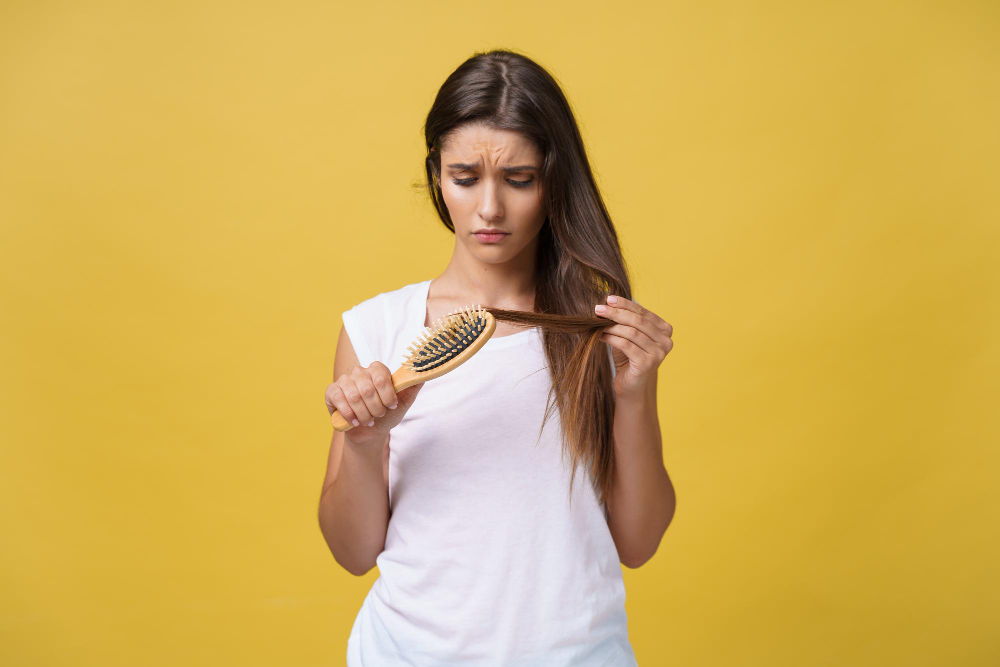
Many people worry about hair health, but the terms hair breakage vs hair fall can be confusing. Both problems may lead to thin hair, yet they are not the same. Understanding the difference helps you choose the right care for your hair. In this blog, we will explain what each means, why they happen, and how to prevent them. We will also share tips for healthy hair and when to see a dermatologist.
What Is Hair Breakage?
Hair breakage happens when hair strands snap or split before reaching the scalp. As a result, your hair may look frizzy or uneven. Often, you may notice short, broken pieces on your pillow or in your brush. Unlike hair fall, the root is not attached to the strand. For example, harsh brushing or heat styling can cause breakage. According to dermatology experts, breakage is common in dry or weak hair.
What Is Hair Fall?
Hair fall, also called hair shedding or hair loss, means the entire hair strand, including the root, comes out from the scalp. Usually, it is normal to lose 50 to 100 hairs a day. However, if you see more hair in your shower drain or on your pillow, it may be a sign of a problem. Hair fall can be caused by stress, illness, or genetics. Sometimes, medical conditions or certain medicines can also lead to hair fall.
Key Differences Between Hair Breakage and Hair Fall
Therefore, knowing the difference helps you pick the right treatment.
Common Causes of Hair Breakage
Many daily habits can lead to hair breakage. For instance, using heat tools or harsh chemicals weakens hair. Even tight hairstyles can put stress on strands. Here are some common causes:
Common Causes of Hair Fall
Hair fall can happen for many reasons. Sometimes, it is a normal part of the hair growth cycle. However, other times, it signals a health issue. Common causes include:
Therefore, if you notice sudden or severe hair loss, talk to a healthcare provider.
How to Identify Hair Breakage vs Hair Fall
It can be hard to tell the difference between hair loss vs hair breakage. Still, there are signs to look for. For example, check the hairs you find on your pillow or brush:
Additionally, if your hair looks frizzy or uneven, breakage may be the cause. On the other hand, thinning at the scalp often points to hair fall.
Diagnosis and When to See a Dermatologist
Sometimes, home care is not enough. If you notice sudden or patchy hair loss, it is wise to see a dermatologist. For example, if you see bald spots or your scalp itches, seek help. A dermatologist can check your scalp and hair. They may ask about your health, diet, and hair care habits. Sometimes, they will do blood tests or a scalp exam. Early diagnosis helps find the right treatment.
Treatment Options for Hair Breakage
Preventing hair breakage starts with gentle care. You can try these tips to help stop hair breakage:
Moreover, protecting hair from sun and harsh weather can help keep it strong.
Treatment Options for Hair Fall
Treating hair fall depends on the cause. For example, if stress or poor diet is the reason, lifestyle changes may help. Some options include:
Always ask a healthcare provider before starting new treatments.
Prevention Tips for Healthy Hair
Keeping hair healthy helps prevent both hair breakage and hair fall. Try these simple steps:
With the right care, you can keep your hair strong and reduce the risk of both hair loss and breakage.
Conclusion
If you are worried about hair breakage or hair fall, our team at DERMAX SKIN & HAIR TRANSPLANT CLINIC can help. Book a consultation today to explore safe and effective options for healthier hair.